Judicial reform: strategic planning and further steps, 15 June, 2015
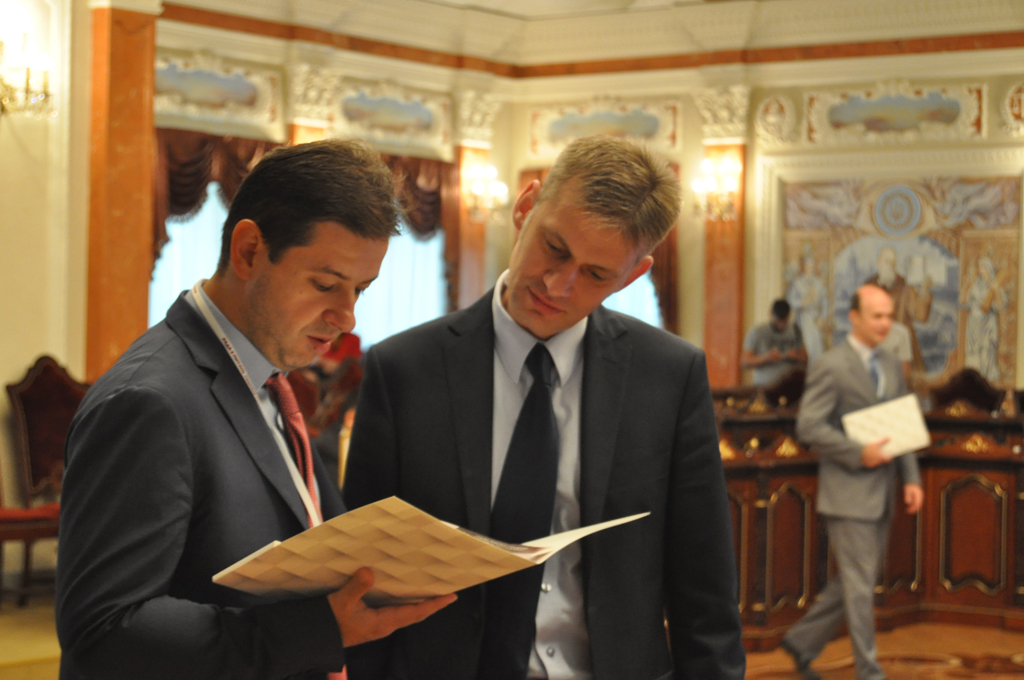
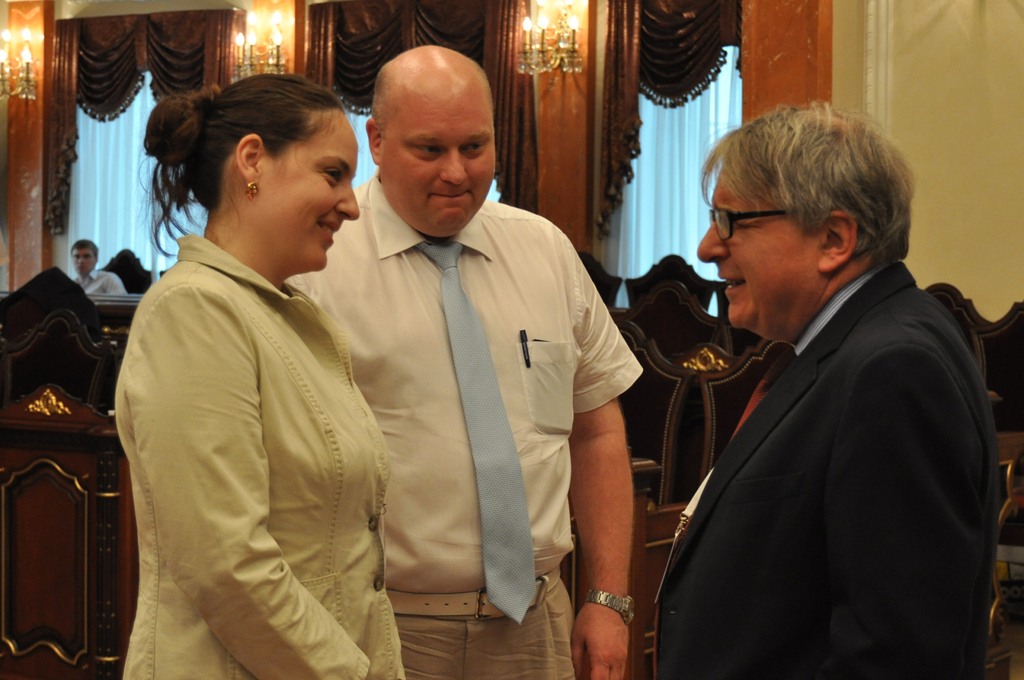
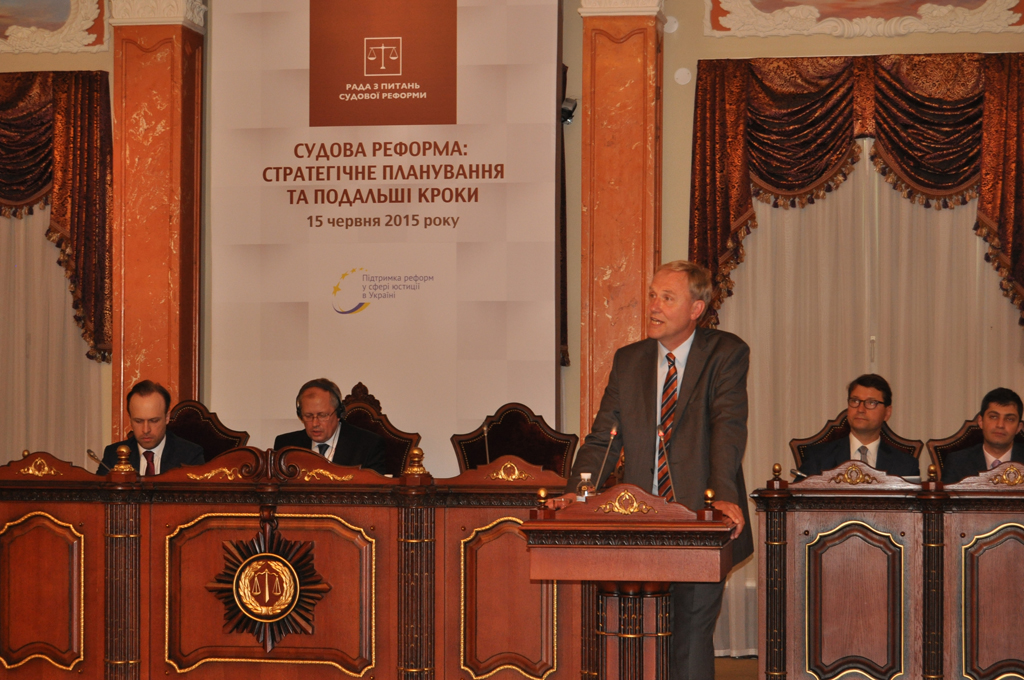
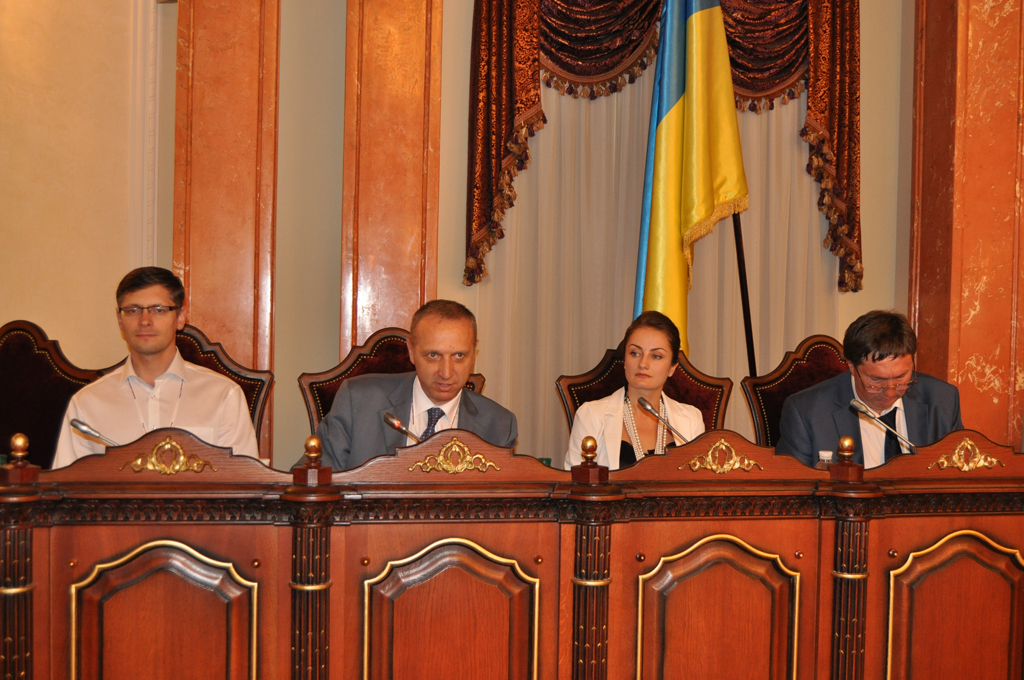
On 15 June 2015 the Supreme Court of Ukraine held a conference on "Judicial reform: strategic planning and further steps." At the event the High Qualification Commission of Judges of Ukraine was represented by Mr Mykola Patriuk, Deputy Chairman of the Commission, Mr Stanislav Shchotka, Secretary of the Commission, Mr Yurii Titov, Commission member , Mr Andrii Vasylenko, Advisor to the Chairman of the Commission and Mrs Polina Kazakevych, Head of the International Cooperation Department of the Commission.
At conference the issues of Judicial Reform Strategy and its implementation were discussed. During panel discussions the participants broached the proposals to amend procedural legislation, to reform the prosecutor's office, the public defender's office, the system of enforcement.
As was noted in his speech by Mr Berend De Groot, Head of External Assistance Programs of the EU Delegation to Ukraine, their experts help to reform the judicial system of Ukraine and expect for progress in resolving this issue.
Mr Oleksii Filatov, Deputy Head of Presidential Administration of Ukraine warned not to expect a rapid success of the reform. According to Mr Filatov, the question of jurisdictions and specializations are the secondary ones, but the main thing is who administers the justice. Therefore, that is why judicial reform was started with the change of qualitative approaches to the formation of the judicial corps.
In view of this, Mr Filatov stressed the important role of the High Qualification Commission of Judges of Ukraine and the High Council of Justice, which are formed by the new rules and consist of highly professional and authoritative lawyers. He also reminded that soon the Commission should adopt the procedures and start qualification assessment of judges of the Supreme Court and Higher courts of Ukraine and then to proceed with judges of the appeal and first instance.
"Conducting assessment of each judge is critical towards judicial reform," Mr Filatov said. In his view, the purpose of the evaluation is cleansing the judiciary of non-professionals and judges who do not meet the criteria set by anti-corruption legislation and legislation on restoring confidence in the judiciary.
The Parliament and other bodies involved in the reforming judiciary took great efforts to cleanse the judicial corps, so the judge like no other should be interested in this process. This opinion was expressed by Mr Leonid Yemets, First Deputy Chairman of the Committee on Legal Policy and Justice of the Parliament of Ukraine. He added that he is full of optimism for those who became members of the High Qualification Commission of Judges of Ukraine and the High Council of Justice, but until there is a result of both bodies, we can not say that they are working effectively.
In the panel discussion on "The judicial system: which model is best for Ukraine?" Mr Yaroslav Romaniuk, President of the Supreme Court of Ukraine espoused the view about thee-level system of courts. Mr Bohdan Lvov, Chairman of the High Commercial Court of Ukraine, Mrs Maryna Chervynska, Deputy Chairman of the Higher Specialized Court of Ukraine for Civil and Criminal Cases and Mr Mykhailo Smokovych, Deputy Chairman of the High Administrative Court of Ukraine had a different opinion and defended the four-level system of courts.
Participants of one of the panel discussions, moderated by Mr Stanislav Shchotka, Secretary of the Commission, brought finding the perfect "formula" of a new judge under deliberation.
As was noted by Mr Vladimir Kravchuk, judge of the Lviv District Administrative Court, the society put the highest expectations on the principle of judicial independence. At the same time, Mr Kravchuk inquires whether the society is ready to live under the conditions of independence of judges and whether the State can put up with the independent judiciary. Therefore, there shall be favorable conditions for the emergence of a new judge.
Mrs Anna Ohrenchuk, Chairman of the Committee on Procedural Law of the Ukrainian of the All-Ukrainian NGO «Ukrainian Bar Association», believes that the judiciary should be more transparent. She also noted that the establishment of a professional dialogue between lawyers and judges would ensure high confidence in the court. According to Mrs Ohrenchuk, a new judge is a judge whom others can trust.
Mr Stanislav Shchotka agreed with this opinion having added that the judge should love his job. Mr Shchotka emphasized that a judge shall be a man with a cold mind and an ardent patriotic heart, and added that there is a hope that such judges will appear.
The conference was organized by the Judicial Reform Council with the support of the Supreme Court of Ukraine and the EU Project “Support to Justice Sector Reforms in Ukraine”.